Militarizing the Maritime Silk Road: Chinese-Funded Ports as Potential Bases
Date Published
Oct 13, 2026
Authors
Alex Wooley, Sheng Zhang, Rory Fedorochko, and Sarina Patterson
Publisher
Harvard University Press
Citation
Wooley, A., Zhang, S., Fedorochko, R., & Patterson, S. (2026). Militarizing the Maritime Silk Road: Chinese-Funded Ports as Potential Bases. In M. Ye, J. Heine, G. Rhode, and A. Wilson (Eds.), Traversing the Belt and Road (pp. 235–259). Harvard University Press. https://www.hup.harvard.edu/books/9780674307391
Abstract
Is China’s signature global strategy a boon to world development or a channel for control? Traversing the Belt and Road brings together leading voices from China and across the globe to examine the Belt and Road Initiative (BRI) a decade after its launch. Spanning Asia, Europe, Latin America, and Africa, these essays highlight the diverse patterns and evolving dynamics across both the land-based and maritime Silk Roads. The volume’s findings—that while the BRI has facilitated development convergence in many regions, it has also intensified geopolitical competition and posed new governance challenges—are both encouraging and sobering.
Engaging with key debates in world development and great-power rivalry, this book unpacks the BRI’s adaptive nature and highlights its shift toward green and digital globalization. The wide range of methods employed—including comparative case studies, historical inquiry, statistical modeling, and field-based research—show how local agency, institutional variation, and global dynamics have shaped outcomes on the ground. An indispensable resource for scholars, students, and policy analysts, Traversing the Belt and Road offers a timely and empirically grounded perspective on China’s global ambitions—and the roadblocks in its path.
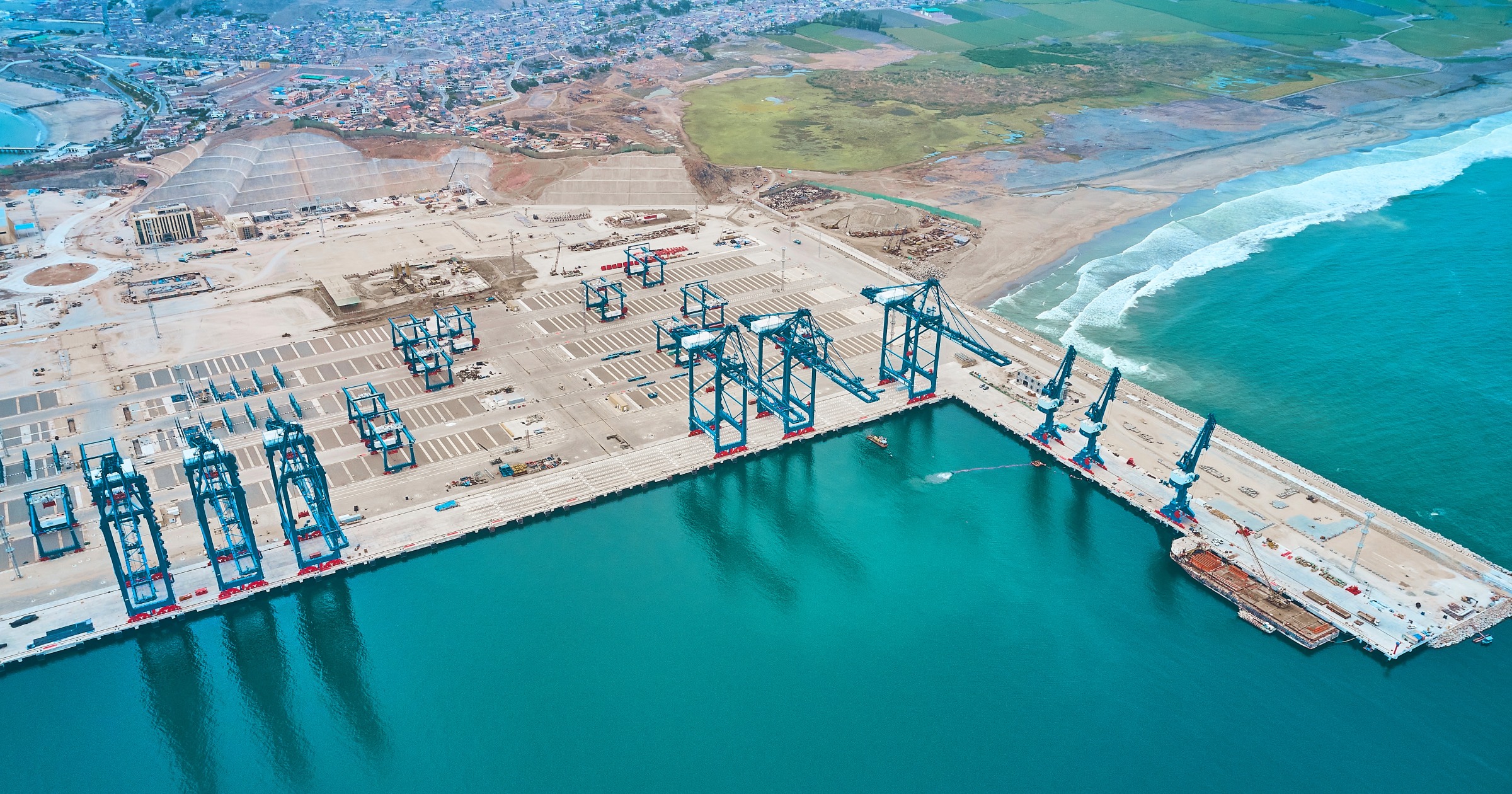
Grounded in new empirical insights into China’s official financing of port projects worldwide, Chapter 10 of this book, "Militarizing the Maritime Silk Road," provides an exploratory analysis of the military implications of these state-directed investments. Drawing upon a novel dataset produced by AidData, the authors construct the known universe of Chinese loans and grants funding seaport projects in low- and middle-income countries from 2000 to 2021. They investigate China’s current and planned capabilities, its instructive history of overseas naval facilities at Djibouti and Ream, and its possible motivations for future bases amid rising geopolitical tensions. The chapter concludes with implications for China, the United States and its allies, and countries in the Global South that receive, or may seek to receive, Chinese port investments.
Related Publications


Featured Authors