Overview
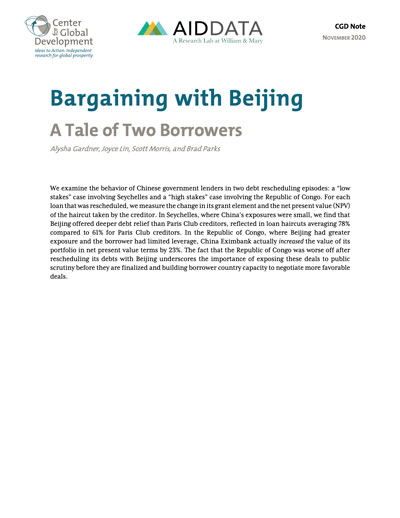
As China has become a central actor in sovereign debt negotiations, understanding its playbook for dealing with debt distress and non-performing loans via debt restructuring events has become critical for assessing burden-sharing outcomes and the adequacy of debt relief operations. However, until recently, there was no standardized, loan-level dataset that systematically measured how Chinese restructurings change sovereign repayment obligations—or how much cash flow relief they actually deliver.
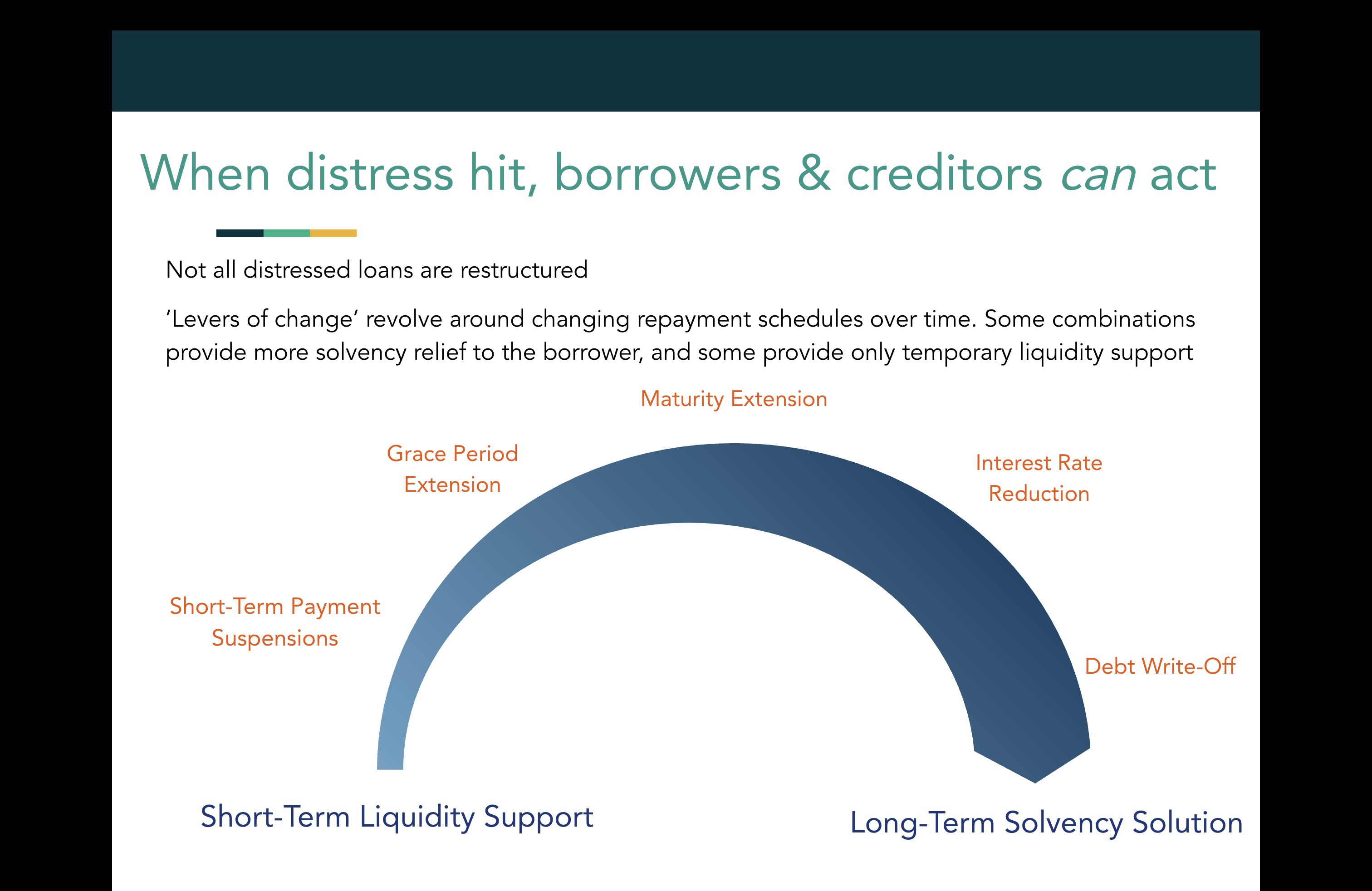
AidData’s Chinese PPG Debt Restructuring Terms and Outcomes Dataset fills this gap by systematically documenting how restructuring events affect PPG loans issued by Chinese official creditors to low- and middle-income countries. It identifies the specific restructuring tools that Chinese creditors use, including maturity extensions, interest rate reductions, principal write-downs, and arrears capitalization. The dataset then translates these revised loan terms into standardized and comparable measures of creditor loss and borrower relief.
Licensing and Updates
The next iteration of the dataset (2.0) will be available for licensing in the fall of 2026, and will cover loan commitments through December 31, 2023 and debt restructuring through mid-2026..The Chinese PPG Debt Restructuring Terms and Outcomes Dataset is a proprietary research product developed by AidData. It is not scheduled for public release.
Institutional access is available through tailored licensing arrangements designed to support policy analysis, risk assessment, and program design. Please contact Brooke Escobar at bescobar@aiddata.org for more details.
Dataset Scope and Architecture
Understand how repayment stresses emerge, how restructurings modify cash flows, and how cumulative creditor losses evolve
AidData’s Chinese PPG Debt Restructuring Terms and Outcomes Dataset (Version 1.1) is a companion product to its The Chinese PPG Loan Performance Dataset 2.0. While the Chinese PPG Loan Performance Dataset measures realized cash flows—tracking disbursements, repayments, arrears, and outstanding balances over the life of each loan—the Restructuring Dataset isolates and quantifies how loan term renegotiations formally alter those trajectories.
For each restructuring event, the dataset captures:
- Changes in maturity, grace period, and repayment schedules
- Interest rate reductions or benchmark adjustments
- Principal write-offs
- Arrears capitalization and penalty fee treatment
- Serial restructurings affecting the same loan or portfolio
Using standardized measures of creditor losses (i.e. haircuts) including Sturzenegger–Zettelmeyer (SZ) haircuts and cumulative Bulow–Rogoff haircuts, the dataset quantifies the impact of each restructuring under multiple discount rate assumptions. This allows users to identify key patterns and trends in how Chinese creditors approach PPG debt restructuring, evaluate creditor burden-sharing outcomes, compare Chinese PPG debt restructurings to those undertaken by Paris Club creditors, and assess compliance with comparability-of-treatment principles and commitments.


Case Study
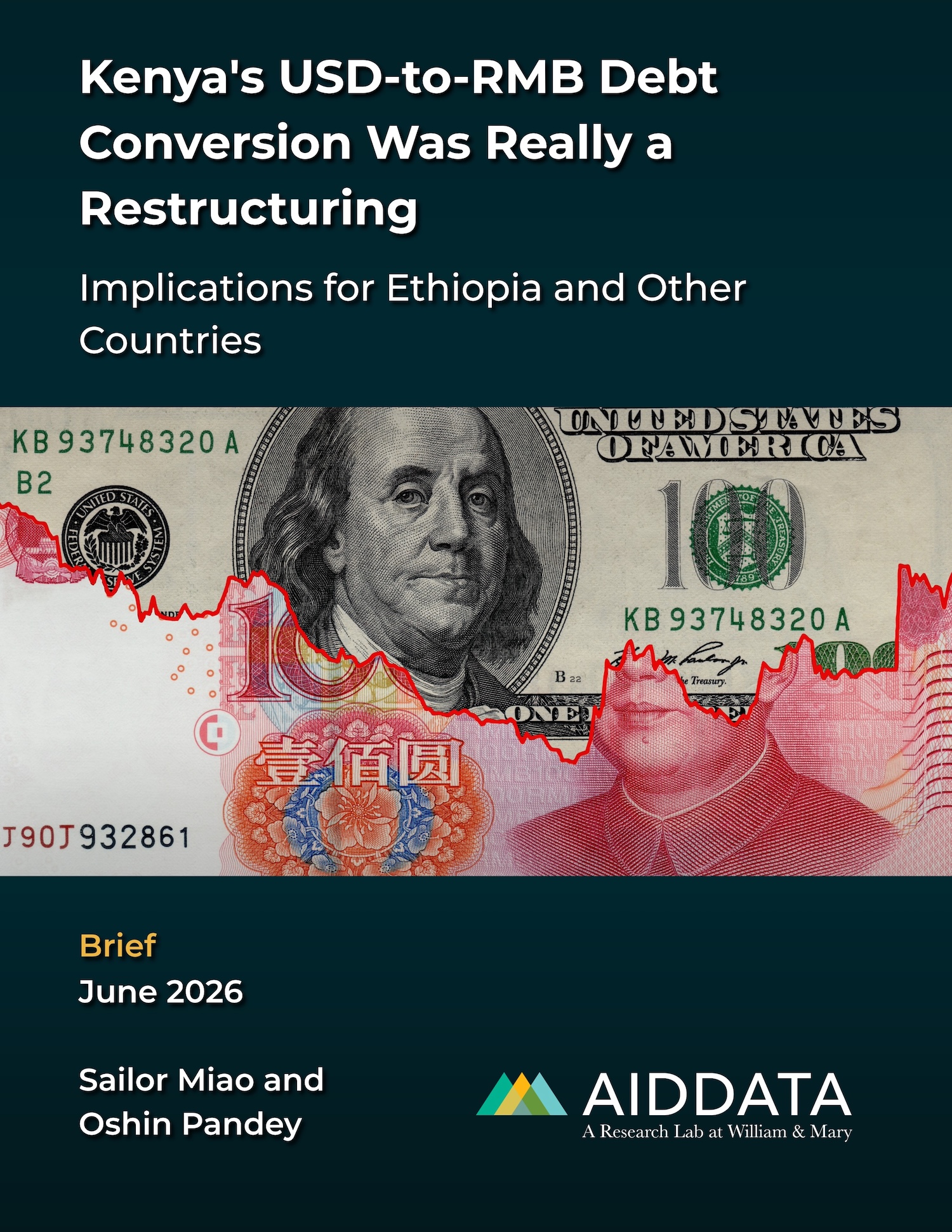
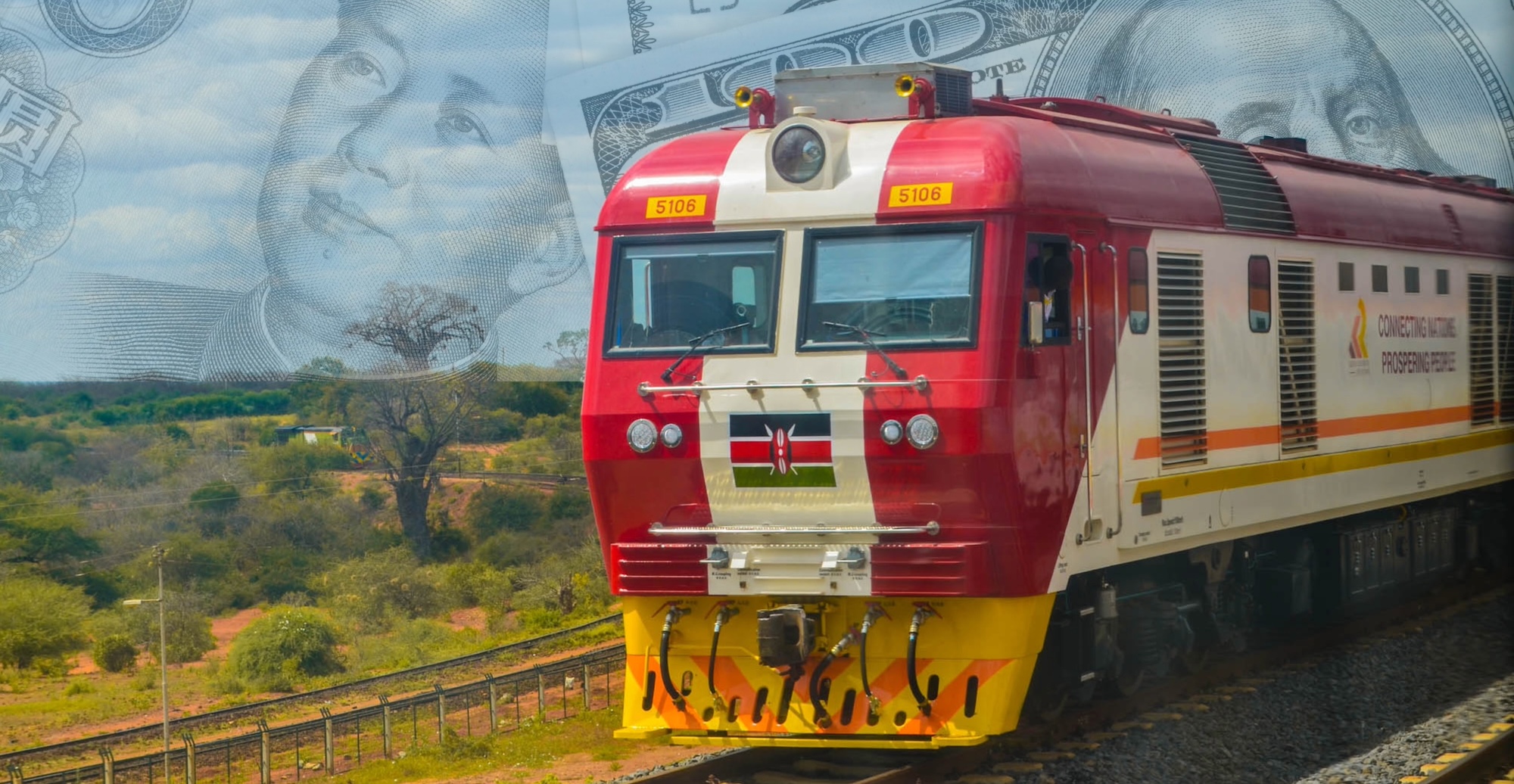
Kenya’s USD-to-RMB Debt Conversion Was Really a Restructuring
When Kenya announced in October 2025 that it had converted its Standard Gauge Railway debts to China Eximbank from U.S. dollars (USD) into Chinese renminbi (RMB), the move was widely framed as a breakthrough for RMB internationalization and a clever way to reduce borrowing costs. Early reporting suggested the switch could save Kenya roughly $215 million a year due to interest rate reductions associated with RMB.
But this narrative does not tell the full story.
In a new policy note, AidData researchers Sailor Miao and Oshin Pandey and find that the largest source of debt relief did not come from the benchmark rate change alone.
Online contract hub
Search AidData's repository of contracts between Chinese creditors and their oversees borrowers
AidData maintains a repository of contracts between Chinese creditors and their overseas borrowers. This online tool allows users to download digitized copies of the contracts—including loan, escrow account, mortgage, and debt restructuring agreements—and search by creditor, borrower country, sector, and contract clause. At present, the repository contains 371 contracts that involve 20 Chinese creditors and 155 borrowers in 60 low-income, middle-income, and high-income countries. All of these contracts were obtained from publicly available sources—including government registers and gazettes, parliamentary websites, repositories of legal acts, and debt information management systems in borrower countries—using AidData’s Tracking Underreported Financial Flows (TUFF) methodology.